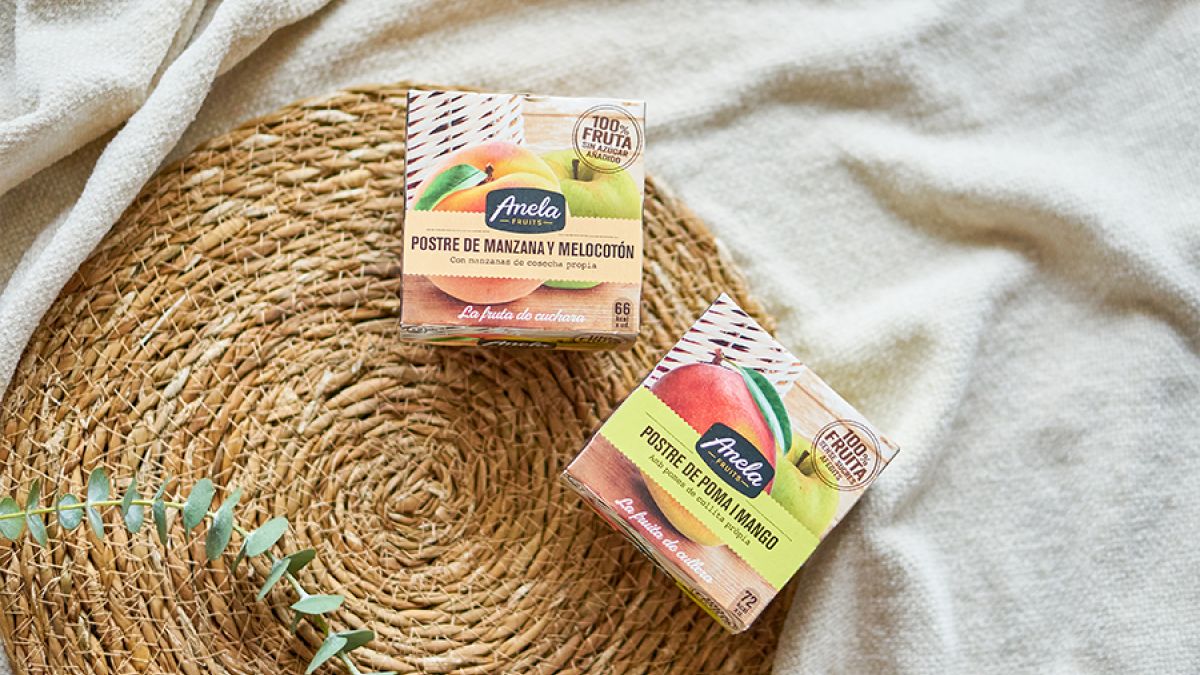
Fruit compotes are part of many families’ diets, but they are often surrounded by doubts and beliefs that are not always true. Are they really healthy? Do they contain added sugars? Are they the same as fresh fruit?
In this article, we debunk some of the most common myths and explain what really lies behind a 100% natural fruit compote like those from Anela Fruits.
Myth 1: “All compotes contain added sugar”
False.
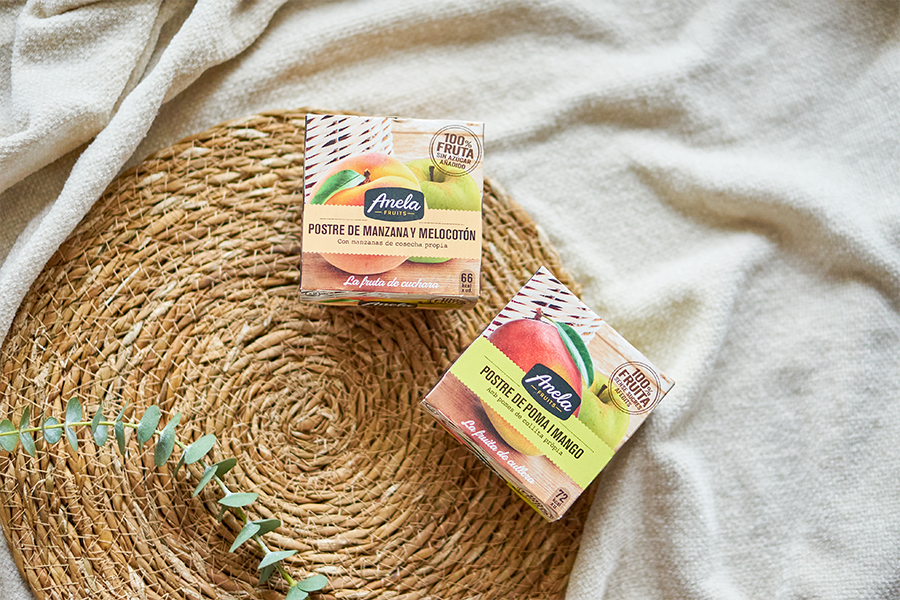
Not all compotes require added sugars. When high-quality fruit is used at its optimal ripeness, the fruit’s natural sweetness is enough.
In our case, we use fruit from our own fields as a base: apples or pears from our own harvest, with no additives or added sugar. It is the fruit itself that, after a quick pasteurization process, retains its nutrients and natural flavor to the fullest.
Myth 2: “Compote is less healthy than fresh fruit”
It depends on how it is made.
It is true that fresh fruit is essential in any balanced diet, but a compote made only from fruit can be an excellent alternative when convenience is needed without sacrificing nutritional quality.
When the process is gentle and quick, much of the fruit’s nutrients, as well as its fiber and original flavor, are preserved.
Myth 3: “Industrial compotes lack traceability”
Not always.
A compote can offer full traceability if it is produced from its own fruit. Controlling the process from tree to final product ensures quality, food safety, and transparency.
Growing apples in Alt Empordà —where the combination of sea and mountains creates an optimal climate— and pears in La Selva and Gironès —areas with ideal humidity— allows us to know the exact origin of each fruit and carefully oversee the entire process.
Myth 4: “Compote is only for children”
False.
Although it is widely used in infant nutrition due to its texture and digestibility, natural compote is suitable for all ages. It is a practical option for breakfasts, snacks, or healthy desserts, for children, adults, and older people alike.
Myth 5: “If it’s packaged, it can’t be natural”
Incorrect.
Packaging does not determine how natural a product is; what matters are the ingredients and the production process.
A compote can be 100% natural if it contains only fruit and is made using a respectful process that preserves its properties. In addition, the use of more sustainable packaging and the reuse of fruit leftovers as natural fertilizer help reduce environmental impact.
Myth 6: “Compote has no nutritional value”
Completely false.
Compotes made exclusively from fruit retain vitamins, minerals, and fiber, especially when the pasteurization process is quick and controlled. This makes them a nutritious and practical option for everyday consumption.
Conclusion: the key lies in the quality of the origin
Not all compotes are the same. The main difference lies in the origin of the fruit, the transparency of the ingredients, and respect for the production process.
When a compote is made from homegrown fruit, cared for from the nursery using sustainable practices, drip irrigation, and minimal environmental impact, the result is an honest, safe product made from 100% fruit.
In short, natural compotes are not just a convenient alternative, but a way to bring fruit into any moment of the day while preserving its essence and original flavor.